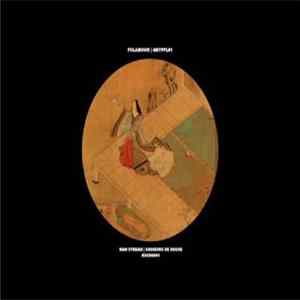
» » Bob Dylan - Blonde On Blonde

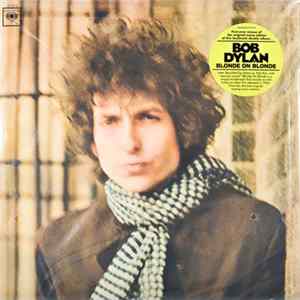
Bob Dylan - Blonde On Blonde FLAC

Bob Dylan - Blonde On Blonde FLAC
  • Performer: Bob Dylan
  • Title: Blonde On Blonde
  • Genre: Rock
  • Cat #: LP 5110
  • Label: Columbia, Sundazed Music
  • Country: US
  • Date of release: 2002
  • Style: Folk Rock, Blues Rock
  • FLAC size 1274 mb
  • MP3 size: 2184 mb
  • Record From 2 × Vinyl, LP, Album, Reissue, Mono, 180 g

Tracklist

1Most Likely You Go Your Way And I'll Go Mine
2Sad Eyed Lady Of The Lowlands
3One Of Us Must Know (Sooner Or Later)
4Leopard-skin Pill-box Hat
Lead Guitar – Bob Dylan
5I Want You
64th Time Around
7Just Like A Woman
8Obviously 5 Believers
Harmonica – Charlie McCoy
9Absolutely Sweet Marie
10Rainy Day Women #12 & 35
11Visions Of Johanna
12Pledging My Time
13Memphis Blues Again
14Temporary Like Achilles

Versions

CategoryArtistTitle (Format)LabelCategoryCountryYear
C2L 41Bob Dylan Blonde On Blonde ‎(2xLP, Album, Mono, Pit)ColumbiaC2L 41US1966
CS 841Bob Dylan Blonde On Blonde ‎(SACD, Album, RE)ColumbiaCS 841US1999
MFSL 3-45009, 88697948091Bob Dylan Blonde On Blonde ‎(3x12", Album, RE, 180 + Box, Ltd, Num)Mobile Fidelity Sound Lab, Columbia, Sony Music Commercial Music GroupMFSL 3-45009, 88697948091US2013
C2S 841Bob Dylan Blonde On Blonde ‎(2xLP, Album, San)ColumbiaC2S 841US1966
S 62 737Bob Dylan Blonde On Blonde vol 2 ‎(LP, Album)CBSS 62 737NetherlandsUnknown
CategoryArtistTitle (Format)LabelCategoryCountryYear
C2L 41Bob Dylan Blonde On Blonde ‎(2xLP, Album, Mono, Pit)ColumbiaC2L 41US1966
CS 841Bob Dylan Blonde On Blonde ‎(SACD, Album, RE)ColumbiaCS 841US1999
MFSL 3-45009, 88697948091Bob Dylan Blonde On Blonde ‎(3x12", Album, RE, 180 + Box, Ltd, Num)Mobile Fidelity Sound Lab, Columbia, Sony Music Commercial Music GroupMFSL 3-45009, 88697948091US2013
C2S 841Bob Dylan Blonde On Blonde ‎(2xLP, Album, San)ColumbiaC2S 841US1966
S 62 737Bob Dylan Blonde On Blonde vol 2 ‎(LP, Album)CBSS 62 737NetherlandsUnknown
CategoryArtistTitle (Format)LabelCategoryCountryYear
CS 841Bob Dylan Blonde On Blonde ‎(SACD, Album, RE)ColumbiaCS 841US1999
MFSL 3-45009, 88697948091Bob Dylan Blonde On Blonde ‎(3x12", Album, RE, 180 + Box, Ltd, Num)Mobile Fidelity Sound Lab, Columbia, Sony Music Commercial Music GroupMFSL 3-45009, 88697948091US2013
C2S 841Bob Dylan Blonde On Blonde ‎(2xLP, Album, San)ColumbiaC2S 841US1966
S 62 737Bob Dylan Blonde On Blonde vol 2 ‎(LP, Album)CBSS 62 737NetherlandsUnknown
21 0065-1 312, 21 0066-1 312Bob Dylan Blonde On Blonde ‎(2xLP, Album, RE)Globus International, Globus International21 0065-1 312, 21 0066-1 312Czechoslovakia1991

Credits

  • HarmonicaBob Dylan
  • Lacquer Cut ByGI
  • MusicianAl Kooper, Bill Aikins, Charlie McCoy, Hargus Robbins, Henry Strzelecki, Jerry Kennedy, Joe South, Kenneth Buttrey, Jaime Robertson, Wayne Moss
  • ProducerBob Johnston
  • Written-ByB. Dylan
  • Design [Repackage]Skouras Design
  • Mastered By [5.1]George Marino
  • Mastered By [Cd/sacd Stereo]Greg Calbi
  • Mixed ByMichael H. Brauer, Steve Berkowitz
  • PerformerAl Kooper, Bill Aikins, Charlie McCoy, Hargus Robbins, Henry Strzelecki, Jerry Kennedy, Joe South, Kenneth Buttrey, Jaime Robertson, Wayne Moss
  • Photography – Jerry Schatzberg
  • ProducerBob Johnston
  • Reissue ProducerSteve Berkowitz
  • Research [Tape Research]Didier Deutsch
  • Vocals, Harmonica, Written-ByBob Dylan
  • BassHenry Strzelecki
  • Bass GuitarJoe South
  • DrumsKenneth Buttrey
  • GuitarAl Kooper, Jerry Kennedy, Jaime Robertson, Wayne Moss
  • HarmonicaCharlie McCoy
  • KeyboardsBill Aikins
  • Lead VocalsBob Dylan
  • OrganAl Kooper
  • PianoHargus Robbins
  • ProducerBob Johnston
  • VocalsJoe South, Wayne Moss
  • Written-ByB. Dylan
  • MusicianAl Kooper, Bill Aikins, Charlie McCoy, Hargus Robbins, Henry Strzelecki, Jerry Kennedy, Joe South, Kenneth Buttrey, Jaime Robertson, Wayne Moss
  • ProducerBob Johnston
  • Written-ByB. Dylan

Notes

Red Columbia 2-eye labels with ''MONO'' in white lettering at the bottom.
The inside of the gatefold cover shows nine pictures, including one of Claudia Cardinale.
"P" stamped in runouts denotes a Columbia Records Pressing Plant, Pitman pressing.

Album catalog number: C2L 41
Disc One catalog number: CL 2516
Disc Two catalog number: CL 2517

The complete single line of text at the bottom of the inside gatefold reads as follows:
Recorded at Columbia Recording Studios, Nashville, Tennessee / Bob Dylan, Harmonica & Lead Guitar (on "Leopard-skin Pill-box Hat") / Charlie McCoy, Harmonica (on "Obviously 5 Believers") / Musicians: Wayne Moss, Charlie McCoy, Kenneth Buttrey, Hargus Robbins, Jerry Kennedy, Joe South, Al Kooper, Bill Aikins, Henry Strzelecki, Jaime Robertson / Produced by Bob Johnston / Ⓡ "COLUMBIA", [Columbia logo] MARCAS REG. PRINTED IN U.S.A.Cat no S DDP 66012 - Stereo - credits for Big Ben Music Ltd on the labels (different from other releases)
Matrix runout no Side A - S 66012 A3 S 66021-A3
Side B - SDDP 66012 B2
Side C - S 66012 C4 and then something else with 2 lines through
Side D - SDDP 66012 D1Dual layer CD (remastered stereo) and SACD (both hi res stereo and 5.1 surround) release.

Recorded at Columbia Studios, Nashville, Tennessee.
CD/SACD Mastering at Sterling Sound.
CD and 5.1 mixed at Quad Recording Studios
5.1 Mastering at Sterling Sound

© 2003 Sony Music Entertainment Inc. / Originally released 1966 Sony Music Entertainment Inc.

Made in AustriaTrack titles are taken from the labels. B2 is titled "Memphis Blues Again" inside gatefold.
1970 reissue on 1970+ labels with "COLUMBIA" and "eye" logo in orange around label edge.
The inside gatefold sleeve has only 7 pictures, the woman being replaced with a photo of Dylan.180 gram vinyl reissue of Blonde On Blonde.
The catalog number and Columbia logo are on left top of cover.

Barcodes

  • Other (Catalog number, disc 1): CL 2516
  • Other (Catalog number, disc 2): CL 2517
  • Matrix / Runout (A-side label): XLP 113761
  • Matrix / Runout (B-side label): XLP 113762
  • Matrix / Runout (C-side label): XLP 113763
  • Matrix / Runout (D-side label): XLP 113764
  • Matrix / Runout (Runout A variant 1): XLP113761-2B P
  • Matrix / Runout (Runout B variant 1): XLP113762-3H P
  • Matrix / Runout (Runout C variant 1): XLP113763-4F
  • Matrix / Runout (Runout D variant 1): XLP113764-2H S
  • Matrix / Runout (Runout A variant 2): XLP113761-2A 1 P B 1 o
  • Matrix / Runout (Runout B variant 2): XLP113762-3H P A 7 o
  • Matrix / Runout (Runout C variant 2): XLP113763-4F 3 P C C o
  • Matrix / Runout (Runout D variant 2): XLP113764-2E 1 P ɪ 4 o
  • Matrix / Runout (Runout A variant 3): XLP113761-2A 1 P B 5 o
  • Matrix / Runout (Runout B variant 3): XLP113762-3K P o
  • Matrix / Runout (Runout C variant 3): XLP113763-4F P J 4 o
  • Matrix / Runout (Runout D variant 3): XLP113764-2E 1 P ɪ 7 o
  • Matrix / Runout (Runout A variant 4): XLP113761-2A P o
  • Matrix / Runout (Runout B variant 4): XLP113762-3A P o
  • Matrix / Runout (Runout C variant 4): XLP113763-4F P o
  • Matrix / Runout (Runout D variant 4): XLP113764-2E P o
  • Other (Cat # LP 1): CS 9316
  • Other (Cat # LP 2): CS 9317
  • Matrix / Runout (Run-out side A / stamped var.1): XSM113765-4D l ᴘ o
  • Matrix / Runout (Run-out side B / stamped var.1): XSM113766-4A l
  • Matrix / Runout (Run-out side C / stamped var.1): XSM113767-4A D3 ᴘ
  • Matrix / Runout (Run-out side D / stamped var.1): XSM113768-3D ᴘ
  • Matrix / Runout (Runout side A / stamped var.2): o XSM113765-2A 2 P 3 V
  • Matrix / Runout (Runout side B / stamped var.2): o XSM113766-2D V P 3 V
  • Matrix / Runout (Runout side C / stamped var.2): o XSM113767-2D 1 P 2 1
  • Matrix / Runout (Runout side D / stamped var.2): o XSM113768-2L P 1 B
  • Barcode: 5099751235262
  • Rights Society: SACEM SDRM SGDL SACD
  • Rights Society: BIEM
  • Label Code: LC 00162
  • Matrix / Runout (CD1, outer ring): S5123526000-SHYM-V912 01
  • Matrix / Runout (CD1, inner ring): S5123526000-SHYM-V912 D 01
  • Mastering SID Code (CD1, outer ring): IFPI LB 46
  • Mastering SID Code (CD1, inner ring): IFPI LP 73
  • Mould SID Code (CD1): IFPI 07C3
  • Other (CD1 Category): 5123526000/1
  • Matrix / Runout (CD2, outer ring): S5123526000-SHYM-V922 01
  • Matrix / Runout (CD2, inner ring): S5123526000-SHYM-V922 D 02
  • Mastering SID Code (CD2, outer & inner ring): IFPI LP 73
  • Mould SID Code (CD2): IFPI 07D5
  • Other (CD2): 5123526000/2
  • Barcode: 090771511010
  • Matrix / Runout (Label side A): AM 59995 XLP 113761
  • Matrix / Runout (Runout side A, hand-etched): LP-5110-A AM-59995 GI NRP ⓤ
  • Matrix / Runout (Label side B): BM 59995 XLP 113762
  • Matrix / Runout (Runout side B, hand-etched): LP-5110-B BM-59995 GI NRP ⓤ
  • Matrix / Runout (Label side C): AM 59996 XLP 113763
  • Matrix / Runout (Runout side C, hand-etched): LP-5110-C AM-59996 GI NRP ⓤ
  • Matrix / Runout (Label side D): BM 59996 XLP 113764
  • Matrix / Runout (Runout side D, hand-etched): LP-5110-D BM-59996 GI NRP ⓤ

Companies

  • Recorded At – Columbia Recording Studios, Nashville
  • Lacquer Cut At – Nashville Record Productions
  • Pressed By – United Record Pressing
  • Mastered At – Customatrix
  • Pressed By – Columbia Records Pressing Plant, Pitman
  • Recorded At – Columbia Recording Studios, Nashville
  • Pressed By – Columbia Records Pressing Plant, Pitman
  • Recorded At – Columbia Recording Studios, Nashville
  • Copyright (c) – Sony Music Entertainment Inc.
  • Recorded At – Columbia Recording Studios, Nashville
  • Mixed At – Quad Recording Studios
  • Mastered At – Sterling Sound

Video

Comments: (19)
JoJosho
sounds fantastic but mine is warped on "Most Likely You Go Your Way And I'll Go Mine", which fucking sucks
Alsalar
Can some1 tell how good this reissue ?Thanks you all
Elizabeth
Fantastic from what I have read the MOFI pressing is the best sounding pressing you can get but this is phenomenal.
Alexandra
avico78 Can some1 tell how good this reissue ?Thanks you all IMO this is a tremendous pressing; it's dead quiet for starters, not even a hint of warping, and most importantly, the music is represented as good as can be. The harmonica soars. The snare drum & hi-hats snap. Bob's vocals & guitar licks are crisp. You can't go wrong with this one.
Qwne
I have the original vinyl, the 45's and the CD. My dear friend Jeff Hughson said it best when he wrote this to me ... "The best body of work EVER." Bob creates a surrealistic dream-scape here. There is Bob Dylan, followed by everyone else, as far as I'm concerned, this guy is just fascinating. Everything he does I find completely engulfs me. Bob's musical journey encompasses all the roots music of the 20th century and his immersion in each chapter is just as valid as the best artists of that genre. He seems to go through all the different styles of American music. His job is to absorb and interpret them and report back to us. He becomes, Woody Guthrie, Muddy Waters, Jimmie Rodgers, on and on; and his experience and interpretation is as real and valid as the masters he is learning from. The whole history of American music exists in his music as natural and valid as it does in the aforementioned [and many many others] artists. I just dig being able to watch the process and hear the results.He is enigmatic. But, I see him being completely consistent in his values and his view of the world during the the process. The same guy started out in Greenwich in the Sixties, wrote his autobiography, did the SF Press Conference and recorded his recent string of mature and successful music. I think Robert Zimmerman has been cast off like a seasonal skin. But, I think Bob Dylan knows exactly who Bob Dylan is and always has. Now, does he go through lots of different phases, yes. Do some seem to contradict each other, yes. But, he absorbs some of what he has learned and adapts that to the continuously evolving Bob Dylan. He is always open and searching, therefore always changing. But, he seems absolutely centered. One of the most centered people I have ever seen. Part of the process is allowing himself to doubt himself. You know he has a boxing ring at his house, and takes a portable one on the road. He loves to box for recreation. That seems to me to be a very complicated mix of confidence, willingness to be challenged at anytime and a serious desire to win. Very interesting stuff.Perhaps the favorite indoor sport in America today is discussing, worshipping, disparaging, and above all interpreting Bob Dylan. According to legend, young Zimmerman came out of the West, grabbed a guitar, changed his name, and decided to be Woody Guthrie. Five years later he had somehow become Elvis Presley (or maybe William Shakespeare); he had sold out, plugged in his feet, and was rumored to live in a state of perpetual high (achieved by smoking rolled-up pages of Newsweek magazine). Today, we stand on the eve of his first published book (Tarantula) and the morning after his most recent and fully realized LP (Blonde On Blonde), and there is but one question remaining to fog our freshly minted minds: what the hell is really going on here?Who is Bob Dylan, and this is the question that is most incessantly asked and what is he really trying to say? These are not, as such, answerable questions; but maybe by exploring them we can come to a greater understanding of the man and his songs. It is as an approach to understanding that I offer you this essay.Everyone knows that Dylan came east from the North Country in 1960, hung around the Village, and finally got a start as a folksinger. If you’re interested in biographical information, I recommend a book with the ridiculous title of Folk-Rock: The Bob Dylan Story. The author’s attempts at interpretation of songs are clumsy, but the factual portion of the book is surprisingly reasonable (there is no such word as ‘accurate’). The book perpetuates a few myths, of course (for instance, the name ‘Dylan’ actually comes from an uncle of Bob’s and not from Dylan Thomas); and it has its stylistic stumblings. But for just plain (irrelevant) biographical info, the book is worth your fifty cents.There are a few things about Dylan’s past that are relevant to understanding his work (or to not misunderstanding it), however, and these appear to be little known. His roots are deep in country music and blues: he lists Curtis Mayfield and Charlie Rich among the musicians he admires most. But he did not start out as a ‘folk singer,’ not in the currently accepted sense. From the very beginning his desire was to make it in the field of rock & roll.In 1960, however, rock & roll was not an open field. The songs were written in one part of town, then sent down to the recording companies in another part of town where house artists recorded them, backed by the usual house bands. A country kid like Dylan didn't stand a chance of getting into rock & roll, and it did not take him long to find that out. The only way he could get anyone to listen to him and the only way he could keep himself alive was to start playing the coffeehouses. This got him a recording contract and an interested audience, as well as a reputation as a folksinger, and it was one of the luckiest things that ever happened to him. First of all, it put him under pressure to produce and nothing better can happen to any young writer. Secondly, it made him discipline his songwriting, and though he may have resented it at the time, it was this forced focusing of his talents that made them emerge. You have to learn the rules before you can break them.But it was inevitable that folk music would only be a temporary harbor. "Everybody knows that I’m not a folk singer," he says; and, call him what you will, there is no question that by the time Another Side of Bob Dylan appeared he was no longer thinking of his songs in terms of simple guitar accompaniments (to a certain extent he never had been). He was straining at the bit of folk music’s accepted patterns, and fearing, perhaps rightly so, that no one was interested in what he wanted to say anymore. But then Tambourine Man caught on, and people began responding to him as a man and not as a politician. The light was green: He’s been working very hard on a very important song, and he decided he was going to sing it the way he heard it. That was Like a Rolling Stone, and its success meant that from now on he could do a song any way he wanted. ‘I knew how it had to be done, he says; I went out of my way to get the people to record it with me."It was a breakthrough. He was into the rock & roll field for real now, but of course he is no more a rock & roll singer than a folksinger. He is simply an artist able to create in the medium that for him is most free.I have gone into this background only because there continues to be so much useless misunderstanding, so much talk about folk-rock, so much discussion of the old Dylan and the new Dylan. Until you, as a listener, can hear music instead of categories, you cannot appreciate what you are hearing. As long as people persist in believing that Dylan would be playing his new songs on a folk guitar instead of with a band, except that recording with a band brings him more money, they will fail to realize that he is a creator, not a puppet, and a creator who has now reached musical maturity. Dylan is doing his songs now the way he always wanted to do them. He is a bard who has found his lyre, no more, no less; and if you’re interested in what he's saying, you must listen to him on his own terms.It is my personal belief that it is not the artist but his work that is important; therefore, I hesitate to go too deeply into the question of who Bob Dylan is. Owl and Churchy once had a fantastic fight over whether a certain phrase actually fell from the lips of Mr. Twain, or Mr. Clemens. And someone has pointed out that nobody knows if the Odyssey was written by Homer or by another early Greek poet of the same name. Perhaps I don't make myself clear. I only want to point out that if we found out tomorrow that Bob Dylan was a 64-year-old woman who’d changed her sex and a proven Communist agent, we might be surprised, but the words to Mr. Tambourine Man would not change in the slightest. It would still be the same song.I will say, to dispel any doubts, that Mr. Dylan is not a 64-year-old woman or an agent of anything. I met him in Philadelphia last winter; he is a friendly and straightforward young man, interested in what others are saying and doing, and quite willing to talk openly about himself. He is pleased with his success; he wanted it, he worked for it honestly, and he’s achieved it. We talked about the critics, and he says he resents people who don’t know what’s going on and pretend they do. He named some names; it is my fervid hope that when this article is finished, and read, my name will not be added to the list.**SOME PERSONAL NOTES ON UNDERSTANDING DYLAN... hope these add some insight for you.It is difficult to be a critic; people expect you to explain things. That's all right if you don't know what’s going on, you can make up almost any clever-sounding explanation, and people will believe you. But if you do understand a poem, or a song, then chances are you also understand that you’re destroying it if you try to translate it into one or two prose sentences in order to tell the guy next door what it means. If you could say everything that Dylan says in any one of his songs in a sentence or two, then there would have been no point in writing the songs. So the sensitive critic must act as a guide, not paraphrasing the songs but trying to show people how to appreciate them.One problem is that a lot of people don’t give a damn about the songs. What interests them is whether Joan Baez is Queen Jane, or whether or not Dylan dedicated Mr. Tambourine Man to the local dope peddler. These people, viewed objectively, are a fairly despicable lot; but the truth is that all of us act like Peeping Toms now and then. Dylan himself pointed this out in a poem on the back of Another Side. He wanders into a mob, watching a man about to jump off the Brooklyn Bridge: I couldn’t stay to look at him / because I suddenly realized that / deep in my heart / I really wanted / to see him jump. It is a hard thing to admit that we are potential members of the mob; but if you admit it, you can fight it; you can ignore your curiosity about Dylan's personal life and thoughts, and appreciate his generosity in offering you as much as he has by giving you his poems, his songs. In the end you can know Bob Dylan much better than you know your next-door neighbor, because of what he shows you in his songs, and stop treating him as though he lived next door.Another problem, and in a way a much more serious one, is the widespread desire to find out what Dylan’s trying to say instead of listening to what he is saying. According to Bob, I’ve stopped composing and singing anything that has either a reason to be written or a motive to be sung, the word message strikes me as having a hernia-like sound. But people go right on looking for the message in everything Dylan writes, as though he were Aesop telling fables. Not being able to hear something, because you’re too busy listening for the message, is a particularly American malady. There’s a tragic lack of freedom in being unable to respond to things because you’ve been trained to await the commercial and conditioned to listen for the bell.Take a look at a great painting, or a Polaroid snapshot. Does it have a message? A song is a picture. You see it; more accurately, you see it, taste it, feel it. Telling a guy to listen to a song is like giving him a dime for the roller coaster. It’s an experience. A song is an experience. The guy who writes the song and the guy who sings it each feel something; the idea is to get you to feel the same thing, or something like it. And you can feel it without knowing what it is.For example: You’re a sixth grader, and your teacher is reading you Robert Frost’s Stopping by Woods on a Snowy Evening. The poem sounds nice; the words are perhaps mysterious, but still powerful and appealing. You don’t know what the poem means, but you get this feeling; the idea of having ‘miles to go before I sleep’ is a pretty simple one, and it means a lot to you. The poet has reached you; he has successfully passed on the feeling he has, and now you have it too.Years later you read the poem again, and suddenly it seems crystal clear that the poem is about death, and the desire for it. That never occurred to you as a sixth grader, of course; does that mean you originally misunderstood the poem? Not necessarily. Your teacher could say, ‘We want the peace death offers, but we have responsibilities, we are not free to die; but it wouldn’t give you anything. It’s a sentence, a platitude. You don’t even believe it unless you already know it’s true. What the poet does is something different: walking through the woods, he gets a feeling that is similar to the idea your teacher offered you in a sentence. But he does not want to tell you what he believes; that has nothing to do with you. Instead, he tries to make you feel what he feels, and if he succeeds, it makes no difference whether you understand the feeling or not. It is now part of your experience. And whether you react to the poem as a 12-year-old kid, or an English professor, it is the feeling you get that is important. Understanding is feeling, the ability to explain means nothing at all.The way you understand Dylan is to listen to him. Listen carefully; listen to one song at a time, perhaps playing it over and over to let it sink in. Try to see what he’s seeing; a song like Visions of Johanna or Sad-Eyed Lady of the Lowlands (or almost any of his more recent songs) is full of pictures, moods, images, persons, places and things. ‘Inside the museums,’ he sings, ‘infinity goes up on trial.’ It doesn’t mean anything; but you know what a museum feels like to you, and you can see the insides of one, the particular way people look at things in a museum, the atmosphere, the sort of things that are found there. And you have your image of a trial, of a courtroom: perhaps you don’t try to picture a lazy-eight infinity stepping up to the witness chair, but there's a solemnity about the trial, easily associable with the image of a museum. And see how easily the feeling of infinity slips into your museum picture, endless corridors and hallways and rooms, a certain duskiness, and perhaps the trial to you becomes the displaying of infinity on the very walls of the museum, like the bones of an old fish, or maybe the fact that museums do have things that are old in them ties in somehow, there’s no explanation, because the line (from ‘Visions of Johanna,’ by the way) is what it is, but certainly the line, the image, can turn into something living inside your mind. You simply have to be receptive, and of course it is a prerequisite that you live in a world not too unlike Dylan’s, that you be aware of museum courtrooms in a way not too far different from the way he is, that you’d be able to appreciate the images by having a similar cultural background. It is not necessary that you understand mid-century America and the world of its youth in order to understand Dylan; but you have to be a part of those worlds, or the songs will lose all relevance. This is true of most literature, in a way; and of course Dylan has his elements of universality as well as his pictures of the specific.I could explain, I suppose. I could say that Memphis Blues Again is about displacement, and tell you why Dylan would think of a senator as ‘showing everyone his gun.’ But the truth is, that wouldn’t give you anything. If you can’t feel it, you can’t get anything out of it; you can sneer and say ‘it’s commercialism’ or ‘it’s about drugs, and I’m above it,’ but not only are you dead wrong, you’re irrelevant.In many ways, understanding Dylan has a lot to do with understanding yourself. For example, I can listen to Sad-Eyed Lady of the Lowlands and really feel what the song is about, appreciate it; but I have no idea why ‘a warehouse eyes my Arabian drums’ or what precise relevance that has. Yet it does make me feel something; the attempt to communicate is successful, and somehow the refrain ‘Now a warehouse eyes my Arabian drums’: has a very real relevance to me and my understanding of the song. So it isn’t fair to ask Dylan what the phrase means, or rather, why it works; the person I really have to ask is the person it works on, me. And I don’t know why it works, i.e., I can’t explain it. This only means I don’t understand me; I do understand Dylan, that is, I appreciate the song as fully as I believe is possible. It’s the example of the sixth grader and Robert Frost all over again.If you really want to understand Dylan, there are perhaps a few things you can do. Read the poems on the backs of his records; read his book when it comes out; read the brilliant interview that appeared in last April’s Playboy. But above all listen to his albums; listen carefully, and openly, and you will see a world unfold before you. And if you can’t see his songs by listening to them, then I'm afraid that all the explaining in the world will only sink you that much deeper in your sand trap.We have established, I hope, that art is not interpreted but experienced (whether or not Dylan’s work is art is not a question I’m interested in debating at the moment. I believe it is; if you don’t, you probably shouldn’t have read this far). With that in mind, let’s take a cursory look at Blonde on Blonde, an excellent album which everyone with any admiration for the work of Bob Dylan should rush out and buy at once.Two things stand out: the uniform high quality of the songs (in the past Dylan’s LPs have usually, in my opinion, been quite uneven) chosen for this extra-long LP; and the wonderful, wonderful accompaniments. Not only is Dylan’s present band, including himself on harmonica, easily the best backup band in the country, but they appear able to read his mind. On this album, they almost inevitably do the right thing at the right time; they do perfect justice to each of his songs, and that is by no means a minor accomplishment. Blonde On Blonde is in many ways the quality of the sound, the decisions as to what goes where in what order, the mixing of the tracks, the timing, etc., one of the best-produced records I’ve ever heard, and producer Bob Johnston deserves immortality at least. Certainly, Dylan’s songs have never been better presented.And they really are fine songs. It’s hard to pick a favorite; I think mine is Memphis Blues Again, a chain of anecdotes bound together by an evocative chorus (Oh, Mama, can this really be the end, to be stuck inside of Mobile with the Memphis blues again?). Dylan relates specific episodes and emotions in his offhand, impressionistic manner, somehow making the universal specific and then making it universal again in that oh-so-accurate refrain. The arrangement is truly beautiful; never have I heard the organ played so effectively (Al Kooper, take a bow).‘I Want You’ is a delightful song. The melody is attractive and very catchy; Dylan’s voice is more versatile than ever; and the more I listen to the musicians backing him up the more impressed I become. They can’t be praised enough. The song is lighthearted, but fantastically honest; perhaps what is most striking about it is its inherent innocence. Dylan has a remarkably healthy attitude towards sex, and he makes our society look sick in comparison (it is). Not that he’s trying to put down anybody else's values, he simply says what he feels, and he manages to make desire charming in doing so. That is so noble an achievement that I can forgive him the pun about the ‘queen of spades’ (besides, the way he says, I did it, because time is on his side, is worth the price of the album).Obviously Fifth Believers is the only authentic rock & roll song on the record, and it reflects Dylan’s admiration of the early rock & rollers. Chuck Berry and Larry Williams are clear influences. ‘I’d tell you what it means if I just didn’t have to try so hard,’ sings Bob. It’s a joyous song; harp, guitar, vocal and lyrics are all groovy enough to practically unseat Presley retroactively.Rainy Day Women #12 & #35 (the uncut original) is brilliant in its simplicity: in a way, it’s Dylan’s answer to the uptight cats who are looking for messages. This one has a message, and it couldn’t be clearer, or more outrageously true. But somehow Time magazine still managed to miss the point: they think ‘everybody must get stoned’ means everyone should go out and get high on drugs. Evidently they didn't hear where Bob says (about 200 times) that ‘[They] stone ya.’ Oh well. Everybody must get stoned.I could go on and on, but I'm trying hard not to. The album is notable for its sense of humor (Leopard Skin Pillbox Hat and Pledging My Time and much else), its pervading, gentle irony (in 4th Time Around, for example), its general lack of bitterness, and above all its fantastic sensitivity (Sad-Eyed Lady of the Lowlands should become a classic; and incidentally, whoever decided it would sound best all alone on a side instead of with some other songs before and after it deserves a medal for good taste).(Sooner or Later) One of Us Must Know, is another favorite of mine: in its simplicity it packs a punch that a more complex song would often pull. Visions of Johanna is rich but carefully subdued (the country music station plays soft but there’s nothing really nothing to turn off, I love that). Dylan’s world, which in Highway 61 seemed to be bubbling over the edges of its cauldron, now seems very much in his control. Helplessness is still the prevalent emotion (honey, why are you so hard?), but chaos has been relegated to the periphery. Love (and sex, ‘loves’ half sister) are all-important, and love, as everyone knows, has a certain sense of order about it, rhyme if not reason. No one has to ask (I hope) what I Want You is about, or Absolutely Sweet Marie. Or Just Like a Woman, which I want to cut out of the album and mail to everybody. The songs are still a swirl of imagery, but it is a gentler, less cyclonic swirl; more like autumn leaves. The nightmares are receding.Blonde On Blonde is a cache of emotion, a well-handled package of excellent music and better poetry, blended and meshed and ready to become a part of your reality. Here is a man who will speak to you, a 1960s bard with electric lyre and color slides, a truthful man with X-ray eyes you can look through if you want. All you have to do is listen.Review by Jenell Kesler
Vispel
Mono: Canada, US and France 1966 (all different mixes) Stereo: US 1966 or 2008.
Freighton
Yeah I've been through all the stuff the other guy writes about. If I want to read that stuff, I can go on any number of facebook pages or the expectingrain forum. I am only here to find a really good pressing of Blonde On Blonde. There are so many damn listings though, I can't even find a bloody answer.
Lightseeker
Wow, I wish this epic tome had more to do with the pressing at hand and less than an "understand Dylan" flavor. Most people interested in this pressing already "get" bob.
Albums Related to Bob Dylan - Blonde On Blonde
Contacts | Privacy Policy | DMCA
All rights reserved.
veganethik.fr © 2016-2026