 veganethik
The Lady Godiva Memorial Band - Strikes Back!! FLAC
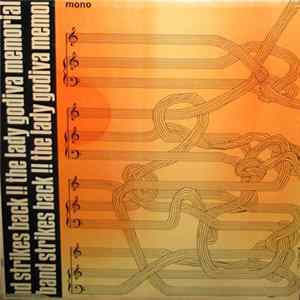
- Performer: The Lady Godiva Memorial Band
- Title: Strikes Back!!
- Genre: Jazz / Audiofiles
- Cat #: ARS - 12864, LGMB1
- Label: Acme Recording Studios, Toronto
- Country: Canada
- Date of release: 1964
- Style: Field Recording
- FLAC size 2379 mb
- MP3 size: 2268 mb
- Record From Vinyl, LP, Album, Mono
Tracklist
| 1 | Lassus Trombone | 2:25 |
| 2 | The Light Cavalry Overture - (C. Von Soup) | 7:00 |
| 3 | The Saints | 2:43 |
| 4 | Five O'Clock In U.C. | 2:50 |
| 5 | Cannon | 0:06 |
| 6 | University Of Toronto | 1:21 |
| 7 | Ben Gunn - (Medical Detective) | 1:50 |
| 8 | 1812 Overture | 9:09 |
| 9 | Huzznaga Chorus | 1:00 |
| 10 | Little Brown Jug | |
| 11 | Divertmento For Mismatched Impedances Or; Reflections On An Infinite Transmission Line (Followed By The "Electronic Stereo Marchpast" | 1:55 |
| 12 | One Minute Of Silence | 0:59 |
| 13 | Godiva, The Skule Cannon, Toike Oike (The Cheer, Not The Journal) And The Great Escape | 2:59 |
| 14 | Electronic Joke #2 | 0:35 |
| 15 | Skeaf Plays Gershwin | 0:46 |
| 16 | Electronic Joke #1 | 0:16 |
Notes
The Lady Godiva Memorial Band Strikes Back! LGMB1 on spine.
The Lady Godiva Memorial Band Strikes Back!! ARS - 12864 on record label and deadwax.
"Playing selected masterpieces guaranteed to elucidate, infuriate, vindicate, eliminate, transfigurate and illuminate the listener"
"Acme Recording Studios - Toronto assumes no responsibility or liability for programme content or quality i.e. don't blame us."
A1 - This masterpiece, recorded in the Smelly Whooshroom of the old Skulehouse, utilizes thermal (Gaussion) background music filtered to simulate the sound of whooshing.
A2 - Depicting the saga of a 90 year old self made medic - (see Treasure Island - p 101) this this cut suffers as the result of an emotionally overwhelmed microphone at the end as it was recorded at the Blue and White Dance (held in honour of the Varsity Blues Annual Win).
A3 - Jim Skeak and Dave Drum
A4 - Another epic Blue and White Dance performance, Lassus Trombone represents the epitome of trombone virtuosity or something.
A5 - This band features a unique invention of Mr. Monro. During the performance, in order to enhance the virtuosity of the woodwind soloists, the tape was speeded up so that the pitch changed one semitone on each of four successive beats. Mr. Monro promises to reveal the howabouts of this technique following patent approval.
A6 - Recorded in the main fish market in Tel Aviv, Five O'Clock in U.C. commemorates the successful renovation of the J.C.R. from a disorganised unaesthetic lunchroom to a disorganised unaesthetic lounge.
A7 - Another Blue and White masterpiece, this band features the extrasensory perception and photostatic importance first introduced on album #1. Note that all unharmonious dischords are suppressed to the exclusion of extraneous decibels; also, those with stereo records will no doubt notice that left channel and right channel are sneakily interchanged at a high frequency during the cannonboom. This creates the illusion of depth and general confusion. Incidentally, the "boom" really is the Skule Cannon.
B1 - Recorded in the Great Hall at Hart House, this epic features solos from the L.G.M.B.'s fabulous trumpet, sax, trombone and drum section. During the silent portions of the band those with expensive stereo equipment may hear the sound of dust falling from the ceiling. Actually this is an effect created by the inclusion of a special abrasive in the outer grooves during all silent periods.
B2 - Skule's sound technicians were faced with multitudinous problems in the recording of the Cannon. Unless a sufficiently large acoustic baffle is utilized, the poles of the transient response move onto the right half of the plane and havoc results. Finally the great Quadrangle of Hart House was chosed due to the superior acoustic qualities afforded by the scattered statues and other debris in the courtyard. Again, those with deluxe equipment will notice the sound of tinkling glass in the background. It is interesting (perhaps) to note that the U of T police provided an escort of twenty officers on blue and gold Hondas for the sound crew.
B3 - In order to achieve the "Glenn Miller Effect", the L.G.M.B. played this piece at 78 rpm rather that 33 1/3. This enables the bandpass to approach you at some instants. Adjustment of treble and bass controls will enable the listener to hear Louis Armstrong singing "Hello Dolly" in between Trumpet solos.
B5 - Recorded in the Great Hall, this masterpiece makes use of the twenty head tape recorder to achieve repeated cannon sounds and frequency modulated carillon chimes.
B6 - This band enables the transients resulting from the previous cut to die away. It may also be used during Remembrance Day ceremonies or as mood music for a dirge.
B7 - (R.I.P.) no comment!
B8 - Recorded on Saturday, November 29 at 3am, the Huzzanga Chorus consists mainly of undoctored screams and white noize. The white noise was created by Fred White, nite watchman at the Edward Johnson Bldg.
B9 - Recorded at Blue and White Homecoming Dance.
-
 Killing Joke - I Am The Virus
 -
 Faith No More - I Started A Joke
 -
 Lady Godiva Memorial Band, The - Blows
 -
Killing Joke - Fire Dances
-
 Master Blaster - Joke
 -
 The Bee Gees - I Started A Joke
 -
 The Great Radio Detectives - Vol. 88 Official Detective "The Eyewitness Who Saw Too Much" 5/4/49
 -
 Leonard Harris - The Joke / I'm A Fool For You
 -
 Third Eye Blind - Joke
 -
 Black Dyke Mills Band - Light Cavalry Overture
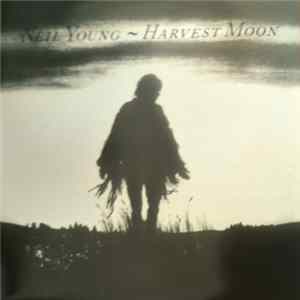 Neil Young - Harvest Moon
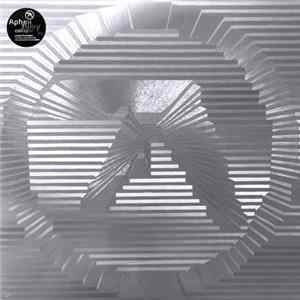 Aphex Twin - Collapse EP
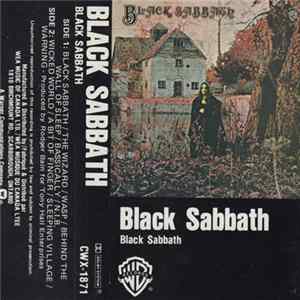 Black Sabbath - Black Sabbath
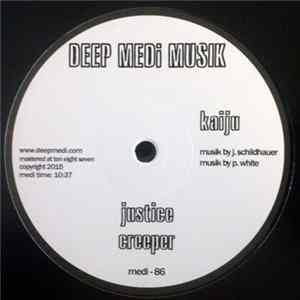 Kaiju - Justice / Creeper
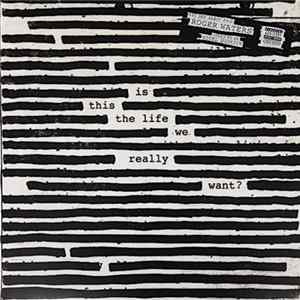 Roger Waters - Is This The Life We Really Want?
 Mazzy Star - So Tonight That I Might See
 Villalobos - Alcachofa
 Unknown Artist - Untitled
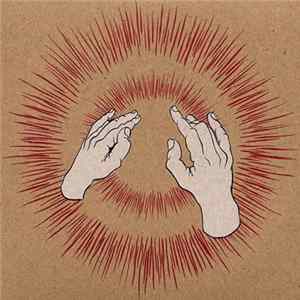 Godspeed You Black Emperor! - Lift Your Skinny Fists Like Antennas To Heaven
 Folamour - 4MYPPL#1