» » The Ventures - Walk Don't Run

The Ventures - Walk Don't Run FLAC

The Ventures - Walk Don't Run FLAC
  • Performer: The Ventures
  • Title: Walk Don't Run
  • Genre: Rock / Pop
  • Cat #: BST 8003
  • Label: Dolton Records
  • Country: US
  • Date of release: Dec 1960
  • Style: Instrumental
  • FLAC size 1746 mb
  • MP3 size: 1020 mb
  • Record From Vinyl, LP, Album, Stereo

Tracklist

1Caravan
Written-By – Ellington, Mills, Tizel
2:14
2The McCoy
Written-By – Wilson, Bogle
2:12
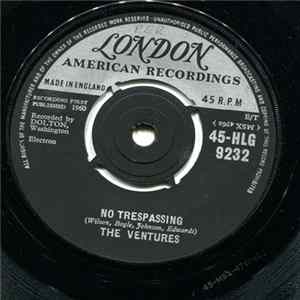
3No Trespassing
Written-By – Wilson, Johnson, Edwards, Bogle
2:03
4Home
Written-By – J. Clarkson, H. Clarkson, Van Steeden
2:24
5My Own True Love (Tara's Theme)
Written-By – David, Steiner
2:19
6Honky Tonk
Written-By – Doggett, Scott, Shepherd
2:47
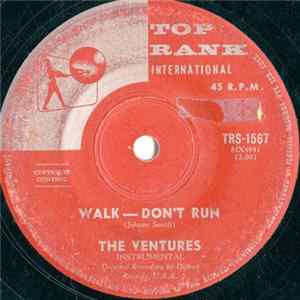
7Walk, Don't Run
Written-By – J. Smith
2:08
8Sleep Walk
Written-By – A. Farina, J. Farina, S. Farina
2:09
9Night Train
Written-By – Forrest, Simpkins, Washington
2:55
10Morgen
Written-By – Sherman, Mosser
2:12
11Raunchy
Written-By – Justis, Jr., Manker
2:21
12The Switch
Written-By – Wilson, Johnson, Edwards, Bogle
2:03

Versions

CategoryArtistTitle (Format)LabelCategoryCountryYear
BST 8003The Ventures Walk Don't Run ‎(LP, Album)Dolton RecordsBST 8003US1960
BLP 2003The Ventures Walk Don't Run ‎(LP, Album, Mono)Dolton RecordsBLP 2003US1960
UAS 29855The Ventures Walk Don't Run ‎(LP, Album, RE)United Artists RecordsUAS 29855France1975
BLP 2003, BLP-2003The Ventures Walk Don't Run ‎(LP, Album, Mono, Scr)Dolton Records, Dolton RecordsBLP 2003, BLP-2003US1960
717342The Ventures Walk Don't Run ‎(CD, Album)Hallmark Music & Entertainment717342UK2018

Credits

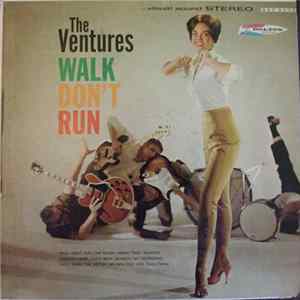
  • Design [Cover]Pate/Francis & Associates
  • EngineerJoe Boles
  • Photography By [Cover]Garrett-Howard Inc.
  • ProducerBob Reisdorff

Notes

"This is a stereophonic, two-channel, non-compatible, long-playing record; to be reproduced with a stereophonic cartridge only. Frequency response: 20 cps to 20,000 cps."
Engineering: Joe Boles Custom Recorders, Seattle, Washington.
Distributed by Liberty Record Sales Corp., Los Angeles 28, Calif.
Printed in U.S.A.
A Blue Horizon Production.

1st pressings like this have Light Blue labels with Fish logo on top. Bottom portion has address "6920 Sunset Blvd. Los Angeles 28 Califorinia"

2nd editions Walk Don't Run have darker blue or green labels with sunset address.
3rd pressing Walk Don't Run have dark Green/Blue labels stating "A Division of Liberty".

Mono copies exist using "BLP-2003"

Barcodes

  • Matrix / Runout (Runout A, Handwritten): BST 8003 (SIDE_1) TIIIIIIIIII-HHII
  • Matrix / Runout (Runout B, Handwritten): BST 8003 1B Side 2 RC 6458-H

Video

Comments: (6)
Sti
A classic instrumental album. BTW thats not the Ventures on the cover. Dolton records distributor Liberty wanted to get the album out ASAP, but the group was out touring. So they used some guys from the Liberty Records warehouse to pose for the cover. The Ventures did pose for the cover of 1964's "Walk, Don't Run Volume 2".
Celak
The VenturesWalk, Don't Run1960Producer: Bob ReisdorffRating: **** (Recommended)Debut from this Northwest group. All instrumental. All cool. The title refers to the hit single, but it also hints at the sound of this album, as the band strolls into this set. While they'd later mostly offer the slow reflective cuts at the end of the sides, for this set they offer more of a roller-coaster ride throughout the album. Later, they found a hip sound that fit in with the current trends, but for this debut, they had the freedom to be a bit more low-key and diverse with their music. (They couldn't know that they were helping to create surf music, a style that would dramatically alter the history of rock.) While this album clearly foreshadows surf music, it also bridges that music back to various locations. In fact, the early albums by the Ventures provide a fairly thorough history lesson, as the band covers many of the songs that influenced this brand of rock music. (And looking beyond the credits, one can clearly hear a Chet Adkins influence on several of these cuts.) For this set, the band looks back to jazz for inspiration, revamping Johnny Smith's 1954 jazz instrumental for the title track, as well as covering Ellington's "Caravan" and Jimmy Forrest's "Night Train." (Of course, the last two cuts had been covered many times before the Ventures got to it so the versions on this album might have been inspired by...) The inclusion of "Sleep Walk" points out another influence, as does the last cut, a big boss version of Doggett's "Honky Tonk." While this set is only partially representative of this group's signature sound, it serves as a good introduction. It's an essential set for fans. -- winch
iSlate
For most of important players in early garage rock, the key elements were the raw energy and the wild abandonment. If they played sloppy, that just helped make it fun. It had heart and it came from the gut. It charged forward, into the crowd. It was amateur dance music, grabbed hold and attached to the pelvis, tapped into something that people had forgotten, something that had been taken away from many cultures. People needed a new folk music, something simple and electric, something that resonated with the times and invited everybody into the energy. But the Ventures had something else going. They weren’t like other NW bands--the Sonics, the Wailers or the Kingsmen. It's not just that they focused on instrumental rock. They were precise and talented, controlled and mechanical. And the music of the Ventures had its own unique influences on bands that followed. They influenced bands throughout the 60s, including Hendrix, and their influence returned in the 70s. The typical punk of the 70s simply took the raw garage rock sound, but other bands of the same era owe much to the Ventures. We can hear their influence in Blondie, the Go-Gos, the Ramones, the Cramps, Pylon, the B52s,...even Devo. The Ventures weren’t the only influence for those bands, but the influence can be heard. The Ventures captured parts of urban NW perhaps better than any other outfit. They were close-knit and DIY from the beginning--with mom doing promotion and production. Their delivery wasn't robotic, but it was precise and mechanical. While they were innovative, their music was derivative. They focused much of their output on covers. And they remained relatively conservative, basically doing the same thing year after year. This is what the isolated urban NW is all about: DIY, controlled mechanical movements, derivative art projects, conservative. In contrast, the abandonment that’s so much a part of some NW rock might be a response to the controlled and conservative environments of urban NW. It’s like the drunken response we witness deep in the night at dive bars. It's the rural NW animal unleashed in the urban setting. While the big NW cities like to make claims, most of the important NW garage bands came from other locations, the Sonics and the Wailers both from Tacoma, the Melvins from Montesano, Nirvana from Aberdeen, Dead Moon from Clackamas. While the Ventures formed in Tacoma, founding member Bogle had just moved there from Portland. If people think of rural NW as extremely conservative, that’s nothing compared to Portland. It’s the most conservative place I’ve ever come across. Sure, it's very liberal, but it's such a conservative form of liberal. If you can’t see that, you either haven’t spent much time there, or you’re not paying attention. The roots of Oregon are extremely conservative, and this has never changed. The settlers might have had many pushes and pulls, but for the most part, they didn't come here to brave a new world. They came to recreate the old. It's the only state that made it against the law to be black. When the Klan didn't have many blacks to pick on, they tried to outlaw private schools so they could get rid of the Irish. These conservative aspects of Oregon go back to its beginnings. Just look at the name of the cities. The local environments could have been inspiration for new names, but they usually simply reused names from the East. Art and architecture was completely derivative. While places such as Portland pretend to rebel against those conservative roots, that didn’t happen. Look at how they name things, Wordstock, Pedalpalooza, NXNW Music Fest, ironically even Keep Portland Weird was borrowed from another city. (And to KEEP something is to conserve something; that's not being weird, that's being conservative.) Many Portlanders today look back to the 80s, which is like looking back to the 50s in the 80s, something only the extremely conservative were doing. Others look back to the 60s, which is like looking back to 1910 in the 60s. Just like in the beginning, it's still a place to escape from the complexities of diversity, still a place where one dominant white culture rules all aspects of life. On the surface their attitudes and artwork might seem in sharp contrast to rural Oregon, but at the core, it's the same. They pedal around town on bikes, putt around on scooters, but that's just an extension of the lone horseman riding the range. Its DIY pathos come from the independent spirit of rural NW. It’s extremely conservative. It’s controlled and robotic. Its art is crafty and derivative. It's nothing new, far from it. And that’s why the music of the Ventures represents urban NW. Fortunately, the Ventures' conservative ways created a standard. Throughout their popularity, rock music was changing. While the Ventures started with a derivative yet diverse sound, they soon became more focused, and they remained relatively focused throughout the years. They might have altered their sounds to fit the times, but for the most part, they found their thing and stuck with it. For most musicians, the 60s and 70s were all about changing with the times, being progressive. If you were just doing the same thing, you were considered boring. Today, people admire the Ramones for sticking with their sound, but at the time... Today, people might wonder why so many UK punk bands became so lousy in such a short time, but the idea of progressing hadn’t gone away with the advent of punk. If you saw punk as a change, you had to consider the continuation of the progression. Otherwise, you were tired and lame, part of the problem you were trying to solve in the first place. But now, we wonder if those bands were even being sincere in the first place. If they could change with the times, maybe they were selling out from the get go. Meanwhile, the Ramones get credit for sticking with their original intents. They became a standard. And the Ventures played a part in developing that standard. If you listen to their early works, they were clearly primed to change with the times. They were way ahead of their time in many ways, incorporating all kinds of world influences in their music in the very beginning, making concept albums in 1961, exploiting studio techniques like reverse-tracking in 1962, playing country rock in 1963. The next year, they were playing fuzzy acid rock (the genre responsible for the excessive side-long jams in the late 60s). In 1965, their Japanese-only release probably invented the hard-rock double-live album (the format that would define excess in the 1970s). And they remained connected with the times by always covering songs by current bands. All this suggested that they would stretch out their songs with excessive elements of acid rock and progressive rock as the years rolled by. But even with the knowledge and talent, they must have realized that rock is best when it's served up as short bursts of R&B. The best rock is garage rock. That might seem like common knowledge today, but as the 60s progressed, few were thinking that way. So in my book, the Ventures rule. (Plus they had cool album covers. That's the most important thing to remember, that and the music. Who cares about what some dumb-ass writer has to say about them.) If you are wondering where to enter with this group, just begin with this 1960 debut.
Fesho
There is a version of this LP with on the backside a photograph instead of a drawing. I looked for the label number, does anyone of the fans know it? Thanks.....
Cha
Here's the answer to your question about the photo instead of a drawing:http://nwmusicarchives.com/record/walk-dont-run-5/
Light out of Fildon
Run, don't walk to your local thrift store, junk shop and buy any ventures LPs with the dalton fish on it, best dollar or 25 cent LP you will ever find
Albums Related to The Ventures - Walk Don't Run
Contacts | Privacy Policy | DMCA
All rights reserved.
veganethik.fr © 2016-2026